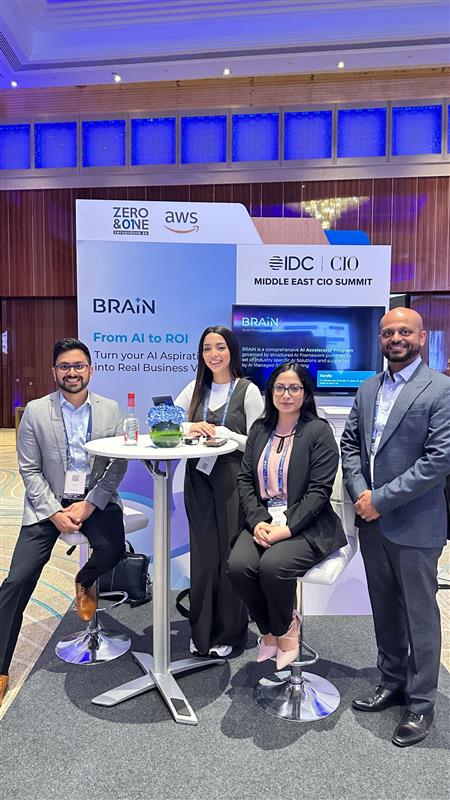
There's a conversation we keep having with clients at Zero&One, and it usually starts the same way. A CTO leans back in their chair, arms crossed, and says: "We're on the cloud now. Isn't that already resilient enough?"
It's a fair assumption. Cloud providers spend billions on infrastructure redundancy. Their SLAs look impressive on paper. And for a long time, the idea of "cloud as the safety net" made intuitive sense to a lot of business leaders.
Then reality intervenes.
In December 2021, an AWS us-east-1 outage took down a significant chunk of the internet, including services from companies that had invested heavily in cloud "reliability." In 2022, a Microsoft Azure Active Directory incident caused widespread authentication failures across multiple services globally. Oracle Cloud had its own moments. None of these providers failed because they were careless. They failed because at scale, failure is inevitable. The question was never if, it was always when and how prepared are you?
And then, earlier this year, something happened that none of our architecture frameworks had explicitly modeled: AWS data centers in the UAE and Bahrain experienced simultaneous physical infrastructure disruptions, knocking out services across the Middle East and forcing AWS to tell its own customers, in plain language, to bring their workloads online in another region immediately.
That one hit differently. We at Zero&One felt it firsthand; not from the sidelines, but from the middle of it. Our MSP team went into immediate response mode, working around the clock alongside our clients to assess impact, execute recovery runbooks, and bring affected workloads back online in alternate AWS regions. Within 48 hours, 90% of our managed clients were back online and operational in other regions. That number didn't happen by accident. It happened because of decisions made long before the incident: in architecture reviews, in IaC templates, in DR drills that most people considered optional.
This is why a solid Disaster Recovery (DR) plan isn't a luxury. It's the foundation.
If there was ever a moment that made multi-region DR feel urgent for those of us working in the Gulf, it was the infrastructure disruptions that hit AWS earlier this year, twice.
Both regions experienced significant physical disruptions outside AWS's control. EC2, S3, RDS, and dozens of dependent services were impacted. Cascading failures spread across multiple availability zones, recovery took many hours, and downstream SaaS platforms built on top of these regions felt the effects too.
AWS's public guidance to customers was direct: migrate your workloads to alternate regions.
This incident was a real-world stress test, not a simulation, not a tabletop exercise. And the results were telling.
Customers who had architected their applications across multiple Availability Zones were significantly more resilient, with many services remaining operational or able to fail over with minimal disruption. This reinforces a key principle we emphasize at Zero&One: the cloud provides the building blocks for resilience, but achieving it ultimately depends on how solutions are designed.
In fact, during this event, we had clients who remained online and continued serving their users because their architectures were distributed across Availability Zones by design. While some platform-level degradation was observed at the regional level, these workloads were far better positioned to absorb the impact compared to single-AZ or tightly coupled deployments. Those who hadn't invested in that design had no fallback: no degraded mode, no partial availability, no ETA. Just down.
AWS's dominant market share in the Gulf also amplified the blast radius. Many regional SaaS providers and enterprise platforms run exclusively on AWS Middle East. When both Middle East regions were simultaneously impacted, the effect was felt far beyond AWS's own services. It cascaded through the regional cloud ecosystem.
For workloads requiring stronger protection, a robust DR architecture should pair the primary Middle East region with at least one geographically distant failover region. On AWS, Route 53 failover routing combined with Aurora Global Database and cross-region S3 replication provides the foundation. On Azure, pairing UAE North with West Europe or Southeast Asia via Traffic Manager and Azure Site Recovery is a proven pattern. On GCP, Google Cloud Backup & DR can orchestrate failover between Dammam and Frankfurt or Singapore with minimal manual intervention.
One of the most common objections our team at Zero&One hears when proposing cross-region DR is regulatory: "Our data can't leave the country." It's a legitimate concern, and one we take seriously. But this incident added an important dimension to that conversation.
During the disruptions, some organizations were temporarily granted exemptions from data residency regulations by their respective authorities in order to restore business continuity. This is significant. It signals that regulators recognize the practical reality of major infrastructure events, and it reinforces the importance of being architecturally ready to act when such an exemption is granted.
This is precisely where Infrastructure as Code (IaC) becomes a strategic asset, not just a DevOps convenience. With Terraform or similar tooling, our team can help clients maintain a complete, version-controlled blueprint of their infrastructure that can be deployed in an alternate region in a fraction of the time it would take to rebuild manually. For organizations operating under strict data residency requirements, IaC doesn't eliminate the regulatory constraint, but it dramatically reduces RTO the moment that constraint is lifted or temporarily relaxed. Being prepared architecturally means the difference between recovering in hours and recovering in days.
The Middle East is one of the fastest-growing cloud markets in the world. That ambition deserves infrastructure resilience to match. This year made that case better than any white paper ever could.
Most organizations migrating to the cloud do the right things early on: they enable multi-AZ deployments, they set up automated backups, they configure health checks. That's good hygiene. But it's not a DR strategy.
Here's the distinction our team at Zero&One always draws: High Availability (HA) keeps the lights on during expected turbulence. Disaster Recovery gets them back on when they go completely dark.
HA is your shock absorber. DR is your spare tire.
When a single cloud provider experiences a regional failure, or worse, a global control plane issue, multi-AZ configurations don't help you. You need workloads running in a fundamentally different environment: a different region, a different provider, or both.
In a multi-cloud world spanning AWS, Azure, and GCP, this is entirely achievable. But it requires intentional architecture, not an afterthought.
Extending DR beyond a single cloud provider introduces complexity, but it also eliminates an entire class of risk: vendor-level failure.
A regional outage is bad. A provider-wide control plane failure is catastrophic. When IAM services go down, nothing works, regardless of how many regions you're deployed in. Running workloads across AWS and Azure, or AWS and GCP, means that a systemic failure at one provider doesn't take your entire operation offline.
There are other benefits that get less attention:
Regulatory compliance. In sectors like financial services, healthcare, and government, data residency requirements sometimes mandate that certain data cannot leave a specific country. A multi-cloud strategy gives you the flexibility to keep sensitive data on a secondary provider, GCP or Azure, within the same region, staying compliant with local data residency laws.
Negotiation leverage. Organizations that can credibly run workloads on multiple clouds have meaningful leverage when renewing contracts. Cloud costs are negotiable, but only if you have alternatives.
Avoiding lock-in at the infrastructure layer. At the DR layer, maintaining provider-agnostic options, containerized workloads, portable databases, standardized APIs, gives you the flexibility to shift when needed.
After reviewing dozens of DR architectures across these three platforms, our team at Zero&One has seen the failure modes cluster around the same patterns:
1. The Strategy Was Never Tested. A runbook that hasn't been executed is just a document with good intentions. At Zero&One, we build DR drills into every managed engagement: quarterly for critical workloads, bi-annually at a minimum for everything else. The clients who recovered fastest during this year's Middle East disruptions were, without exception, the ones who had drilled in the preceding months.
2. RTO/RPO Were Set Without Business Context. Recovery objectives should be driven by business impact, not architectural convenience. DR design must start with a business impact analysis, not an architecture diagram.
3. Data Replication Is an Afterthought. Compute failover is straightforward. Data consistency across regions is where architectures quietly fail. We've seen clients spin up a full stack in a secondary region only to find the database hours behind because replication lag had gone unmonitored.
At Zero&One, our focus is to help organizations design for resilience from day one. If you're building or revisiting a DR strategy, here's how our team sequences the work:
Step 1: Define your tiers. Classify workloads by criticality and assign appropriate RTO/RPO targets. Tier 1 gets active-active or active-passive with near-zero RPO. Tier 3 can tolerate cold standby with daily backups.
Step 2: Map dependencies. Applications don't fail in isolation. A DR plan that recovers the application server but not its dependent authentication service, messaging queue, or payment gateway isn't a plan, it's theater.
Step 3: Choose your DR pattern. The four main patterns, Backup and Restore, Pilot Light, Warm Standby, and Multi-Site Active-Active, represent a spectrum of cost versus recovery speed. Most organizations end up with a mix across their application portfolio.
Step 4: Automate the failover with IaC. Manual failover under pressure is error-prone and slow. Infrastructure-as-code, with Terraform being particularly powerful across providers, combined with runbook automation tools, dramatically reduces human error during an incident and ensures your secondary environment can be rebuilt rapidly and consistently, regardless of which region it lands in.
Step 5: Test, measure, improve. Set a quarterly or semi-annual cadence for DR exercises. Track actual RTO/RPO against targets. Treat gaps as engineering work to be prioritized, not accepted.
DR has a cost. There's no getting around it. Running warm standby environments in secondary regions is real infrastructure spend.
But here's the framing we use with clients: what is an hour of downtime worth to your business? For most organizations we work with, a single serious outage, when you account for lost revenue, SLA penalties, customer trust, and the internal cost of incident response, exceeds the annual cost of a properly designed DR architecture.
DR is not a cost center. It's insurance with a measurable premium and a quantifiable payout scenario. The CFO who pushes back on DR spend should be asked: what's our acceptable loss in a worst-case scenario? That number usually closes the conversation.
The cloud has fundamentally changed what's possible in disaster recovery. Architectures that would have required years and tens of millions of dollars to build on-premises can now be deployed in weeks with the right expertise and tooling. AWS, Azure, and GCP each bring mature, capable DR toolsets to the table, and used together, they offer a level of resilience that simply wasn't accessible to most organizations a decade ago.
But the tools are only as good as the strategy behind them.
At Zero&One, our focus is to help organizations design for that resilience from day one, not after the first incident. The organizations that treat DR seriously don't just recover faster when things go wrong. They build the kind of operational confidence that lets engineering teams move fast without fear, because they know that when the cloud goes dark, they have a plan.
And they've practiced it.
If you found this useful, feel free to connect or drop a comment. Always happy to discuss architecture patterns, share lessons from the field, or dig deeper into any of the platform-specific tooling covered here.